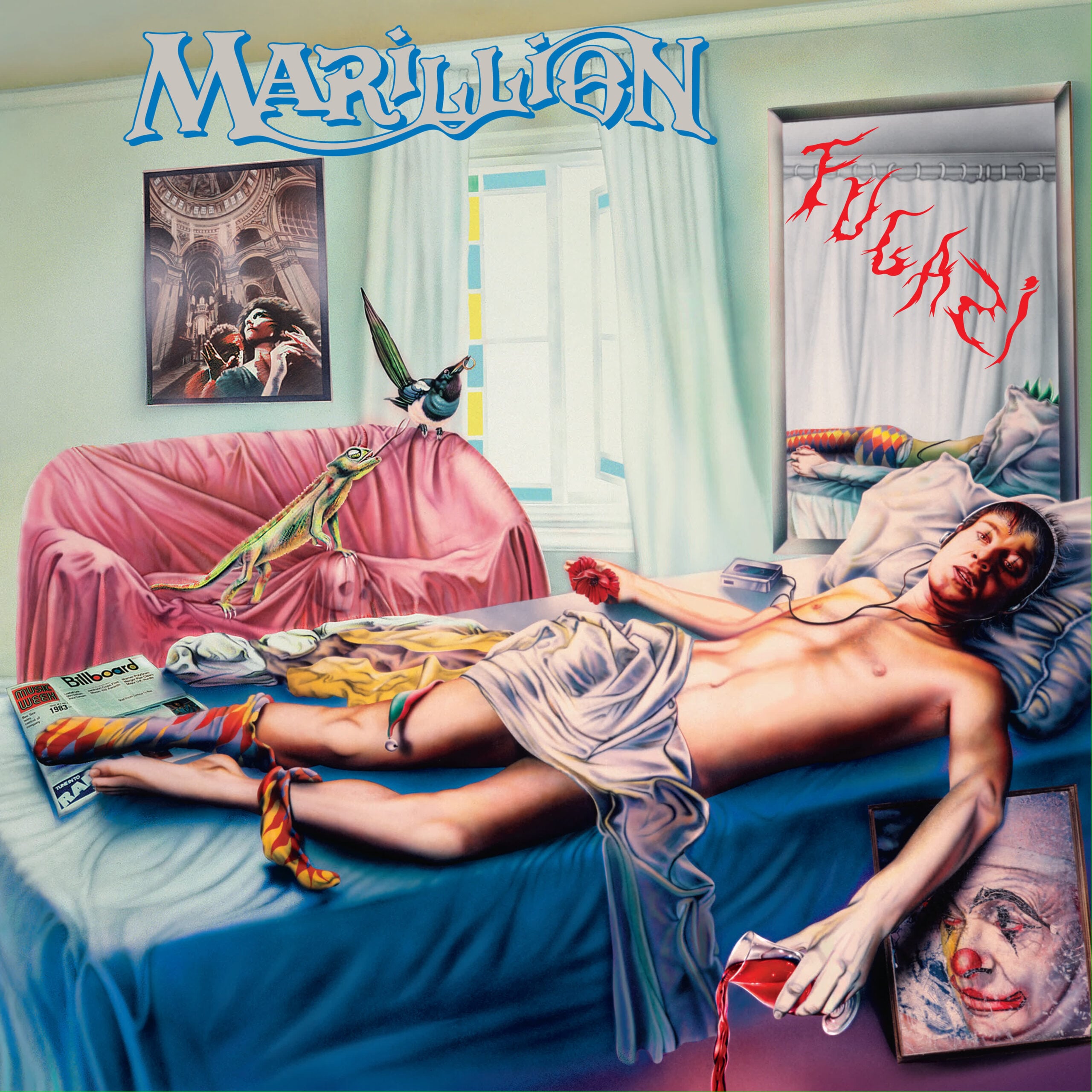
Released on 9 March 1984, Fugazi is Marillion’s second studio album, again produced by David Hitchcock and released through EMI. Taking its title from an American Vietnam War slang term meaning a chaotic or disastrously mishandled situation, the album explores themes of disillusionment, social alienation, and political anxiety with considerably darker intent than its predecessor.
Where Script for a Jester’s Tear had been romantic and emotionally expansive, Fugazi is tenser and more confrontational. Tracks like “Assassing”, with its martial rhythm and barbed imagery, and the sprawling “Incubus” — one of the band’s most demanding and rewarding compositions — demonstrate a deliberate push against easy accessibility. The album also contains “Punch and Judy”, a sharp, almost new wave-inflected piece that stood apart from the band’s more epic material.
Ian Mosley joined Marillion as drummer during the recording of this album, replacing Mick Pointer and cementing the classic Fish-era lineup. His contribution brought a new precision and rhythmic sophistication to the band’s sound.
Fugazi reached number 5 on the UK Albums Chart and consolidated Marillion’s commercial standing while signalling a band unwilling to repeat themselves. It remains one of the most underrated albums in the progressive rock canon of the 1980s.